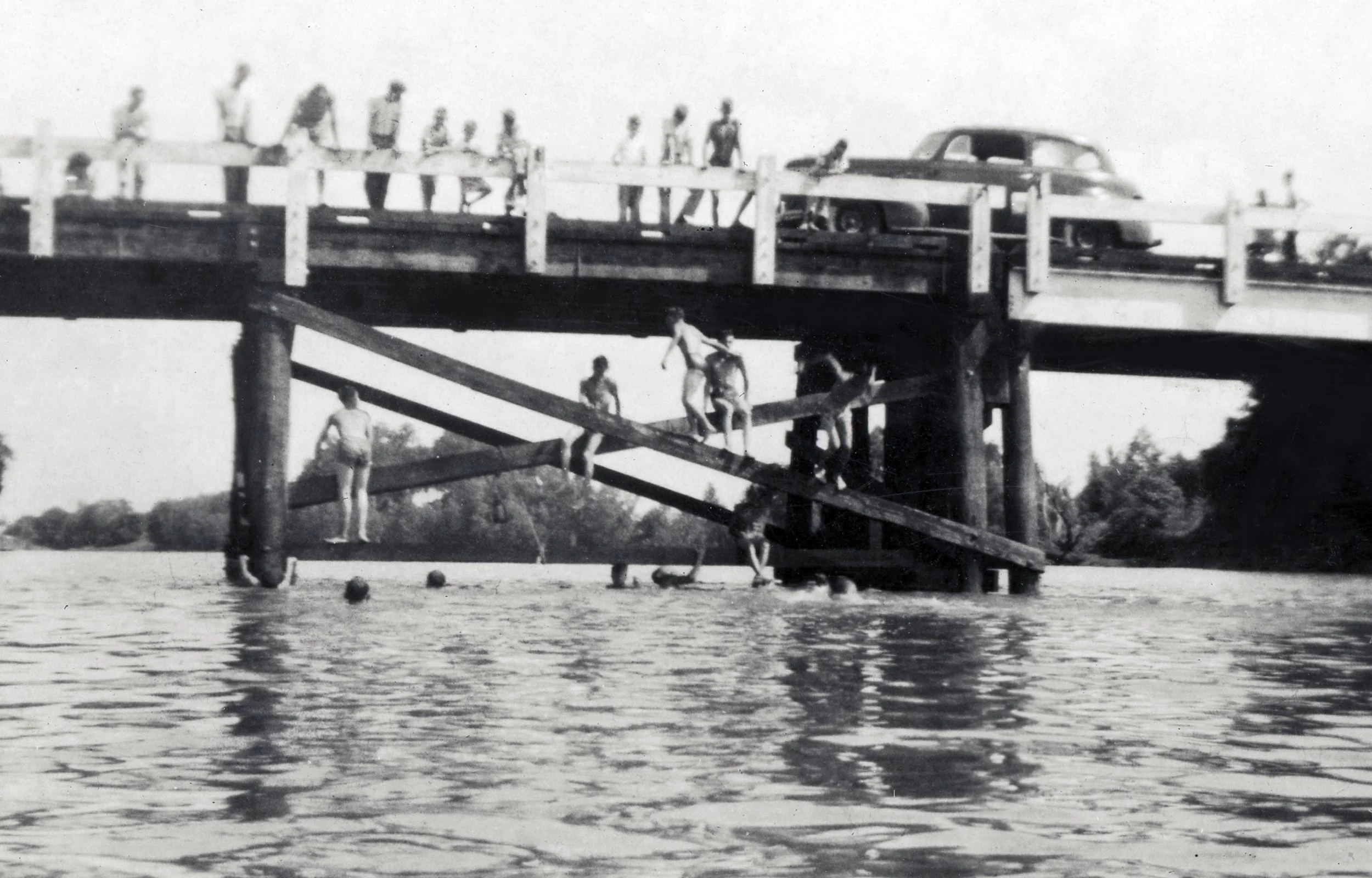
Photo by Benny Broussard
The original timber bridge across Catahoula Lake opened to traffic in 1939, the same year The Wizard of Oz reached theaters, when the small community sprouting up around the lake was in a way an Oz of its own. Picture the slender lake at twilight, Venus in the purple sky above the western horizon, Spanish moss hanging from a wiry persimmon tree, turtles poking their heads above the water.
The far-flung village functioned as a kind of tiny port city at the edge of the Atchafalaya Basin, with docks on the lake serving as active points of connection between the swamp and the wider world, where fish and crabs and turtles and crawfish destined for area dinner tables first came ashore.
Catahoula was a place apart, and in 1939 it was a place of many parts: the lake as the community’s main street, an island forming much of its eastern shore, the new levee cutting across old Bayou Mercier with a gravel road running along the top of it. The bridge across Catahoula Lake and, later, two bridges across Bayou Mercier, pulled these parts together, bringing a wild place into a more practical configuration.
The bridge was rough and rugged in the way that bridges were then. It stood on wooden pilings, with diagonal crossbeams forming large exes of scaffolding at the middle. The roadway was a single lane, and cars took turns crossing it, the metal plates clacking and galloping like the track of an old wooden roller coaster. In my memory it was a movie we would drive through, the soundtrack about seven seconds long.
The most iconic surviving photograph of the bridge is one Benny Broussard took in the 1940s, when the bridge was about seven years old. On any summer day you would see kids jumping into the lake and climbing the crossbeams back up, and Benny’s photograph stands out for the way it captured the bridge’s perfect portrait: a sleek dark car, like a phantom from another century, driving down the roadway, kids diving, or climbing, or bobbing in the water, heads poking up like turtles.
It’s also the rare photograph of the bridge taken from the lake. If you want a proper portrait of any bridge, it’s best to be on the water when you take it. It’s more effort, of course. You have to launch a boat and make your way to the bridge, and paddle, or stop paddling, or turn off the motor and idle, trying to focus your camera as the water rocks you. But from the water you can see the whole length of the bridge, the way it spans the water with its own recognizable character. A portrait photographer moves around a person’s face, looking for the best angle. Bridge portraiture isn’t so different.
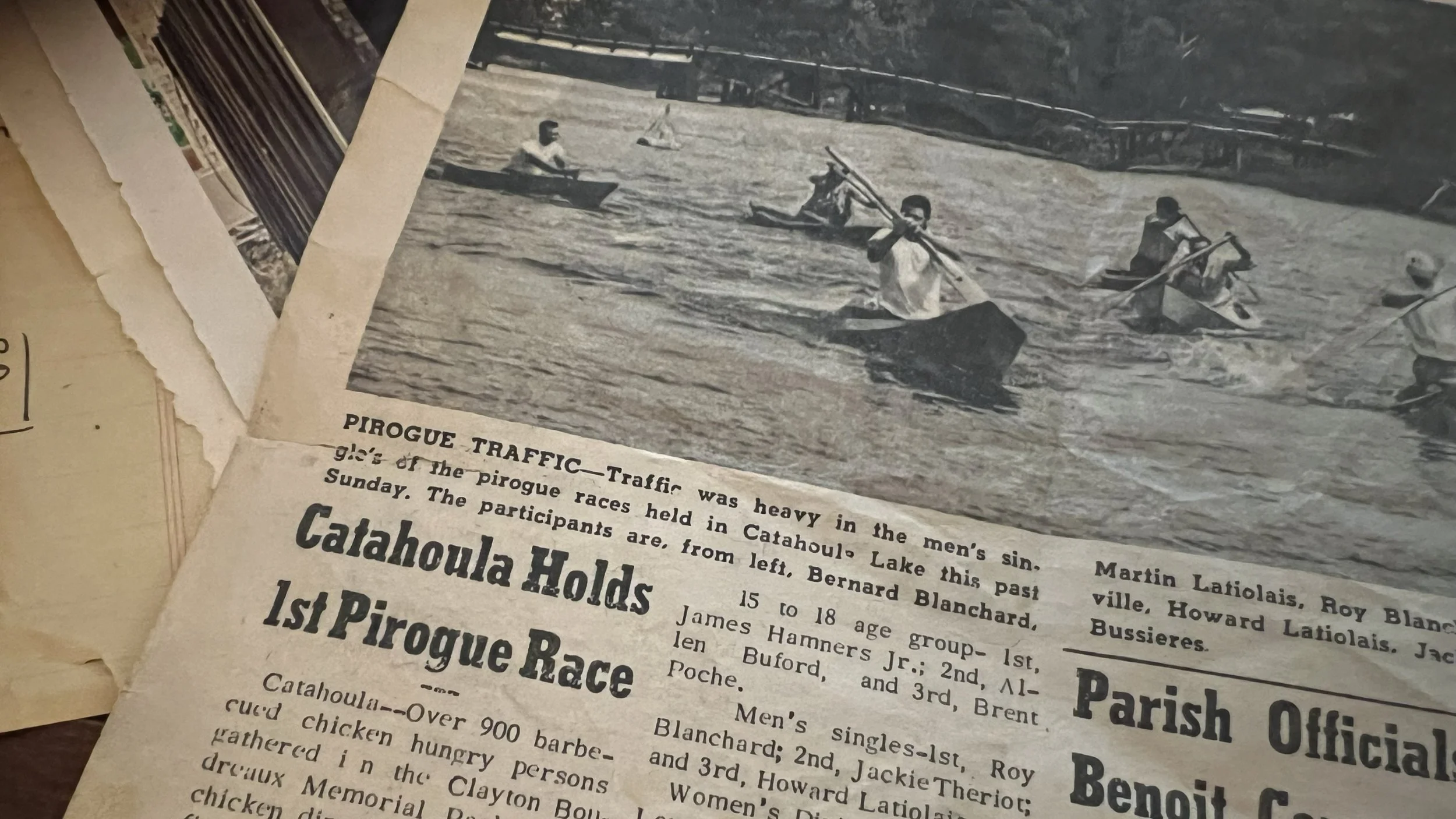
Teche News—Thursday April 30, 1970
When the bridge came down in 1994, it left few photographs behind. I found six out in the community, and maybe six more have appeared in Teche News or The Daily Advertiser when something newsworthy happened nearby and the bridge happened to be in the background. Why didn’t people take more pictures of it? Maybe the biggest reason is that we think these things will be there forever, never realizing that one day we’ll miss the sight of them.
In 2016, when I heard that the other old timber bridge in Catahoula was going to be taken down, the one across Bayou Mercier, I knew what I had to do. During the Civil War, when photography was becoming more accessible, the farewell portrait became a poignant tradition. The pictures expressed pride and patriotism, but also served a more solemn purpose: preserving a soldier’s likeness in case he never returned. So the day before the old bridge came down, I slid my canoe into the bed of my truck, and I drove to Bayou Mercier. Down the steep bank I went, dragging the canoe behind me, and all afternoon I floated, paddling under the bridge, taking its farewell portrait.
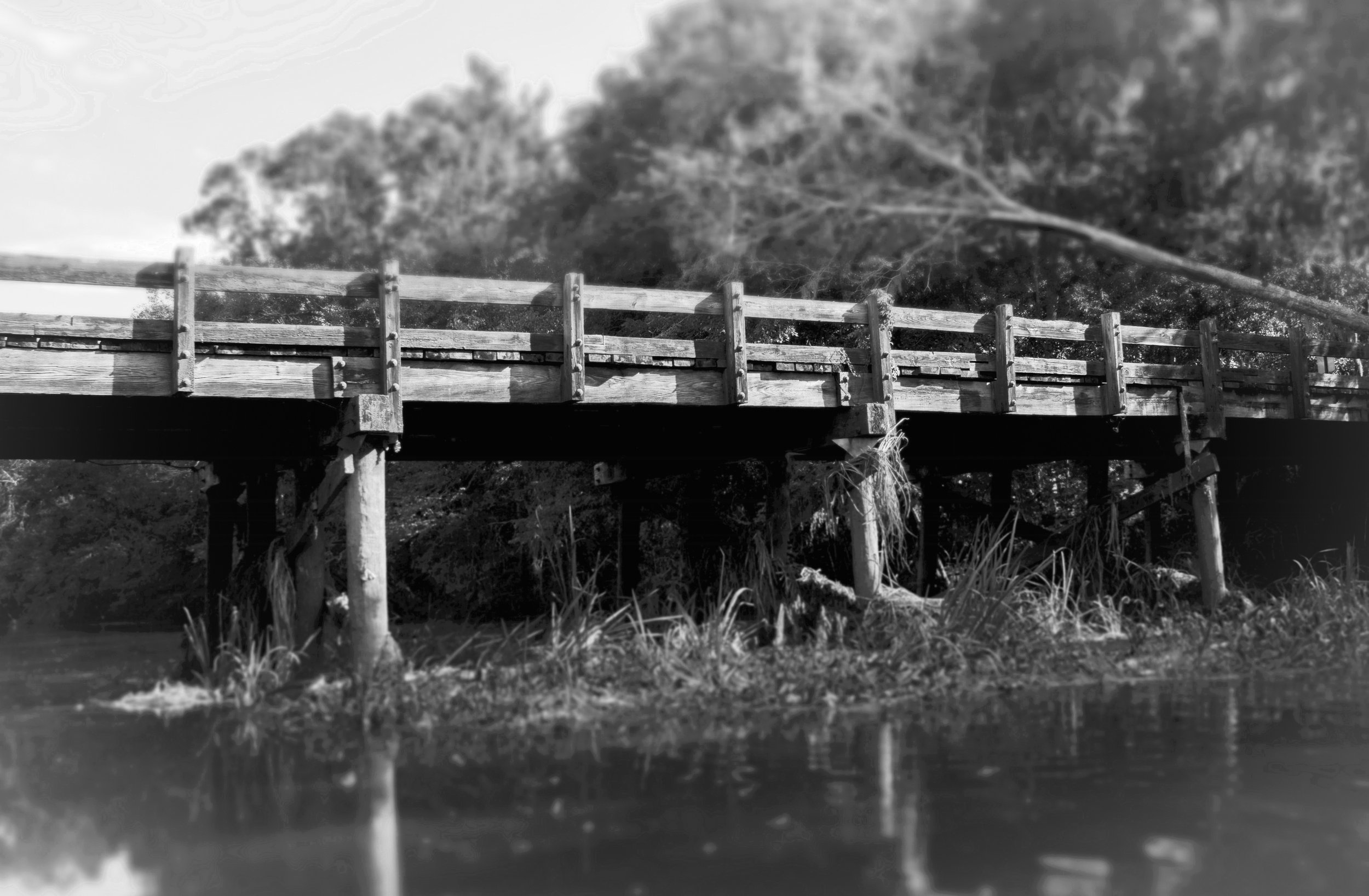
Old Bayou Mercier Bridge, 2016
This old bridge left behind even fewer photographs than the one across Catahoula Lake. It appeared in Teche News only twice, as far as I can tell, and never from the perspective of the bayou. In fact, until that September afternoon it’s quite possible that no high-resolution photographs of that lumbering beast had ever been taken from the water.
And in 2022, when I heard that the old bridge in Butte La Rose was going to be taken down, I knew what I had to do. There was definitely nothing like the Crocodile Bayou Pontoon Bridge, a cross between a pontoon bridge and a drawbridge, and all I wanted was one good farewell portrait taken from the perspective of the bayou.
The bridge didn’t lend itself to being photographed. There’s no landing nearby, so you have to put in at Cypress Cove or Dick Davis and make your way down to the bridge, or do what I did and pull up onto the grass skirt at the edge of the levee and slide my kayak right into the bayou. Nor did the bridge offer an easy silhouette, its parts having been pulled into service not for any visual appeal, but only for their functional role in the overall mechanical whole. It was all cables, pilings, pulleys, counterweights, aprons, fenders and guardrails.
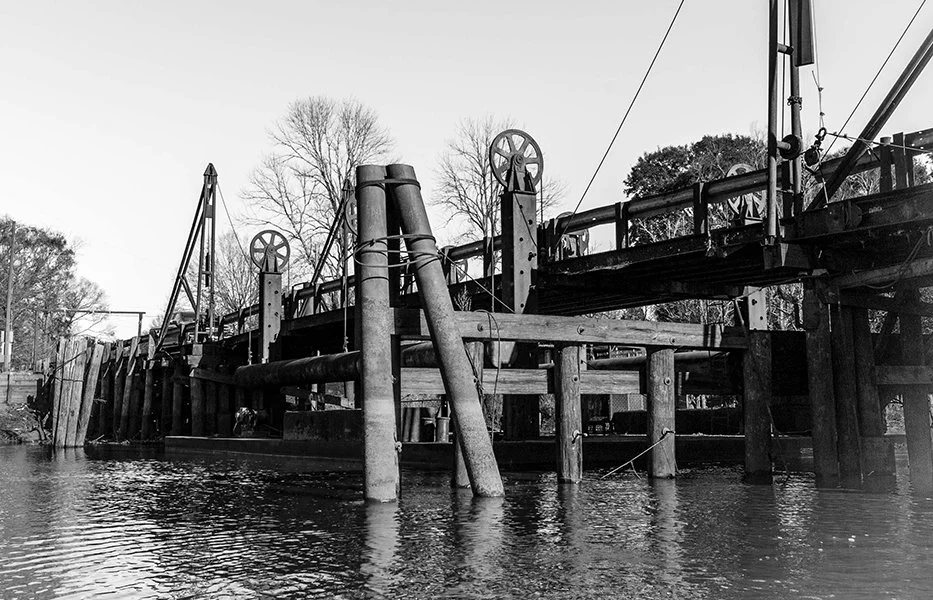
Crocodile Bayou Pontoon Bridge, 2022
Threading through, I took pictures of the hulking creature from every angle, studying the lucid pulleys, tracing the logic of the cables and listening to the music it made when someone drove across it. In 1878, Thomas Edison, proposing possible uses for his new invention, the phonograph, imagined families might want to preserve the actual voices of their loved ones, so that they could continue to be heard long after their passing. In that same spirit, floating underneath it, I recorded the bridge’s song, about seven seconds long.
I had never given much thought to how the old drawbridge did what it did, but as soon as I kayaked through, the sun, as if on cue, climbed higher in the sky to show me. Clearly it was a working bridge, wearing its parts for all to see, not some come-take-a-pretty-picture-in-front-of-me kind of bridge. The rusty, splintered thing wasn’t trying to be beautiful, which only made it more beautiful to me.