Mimosa Season
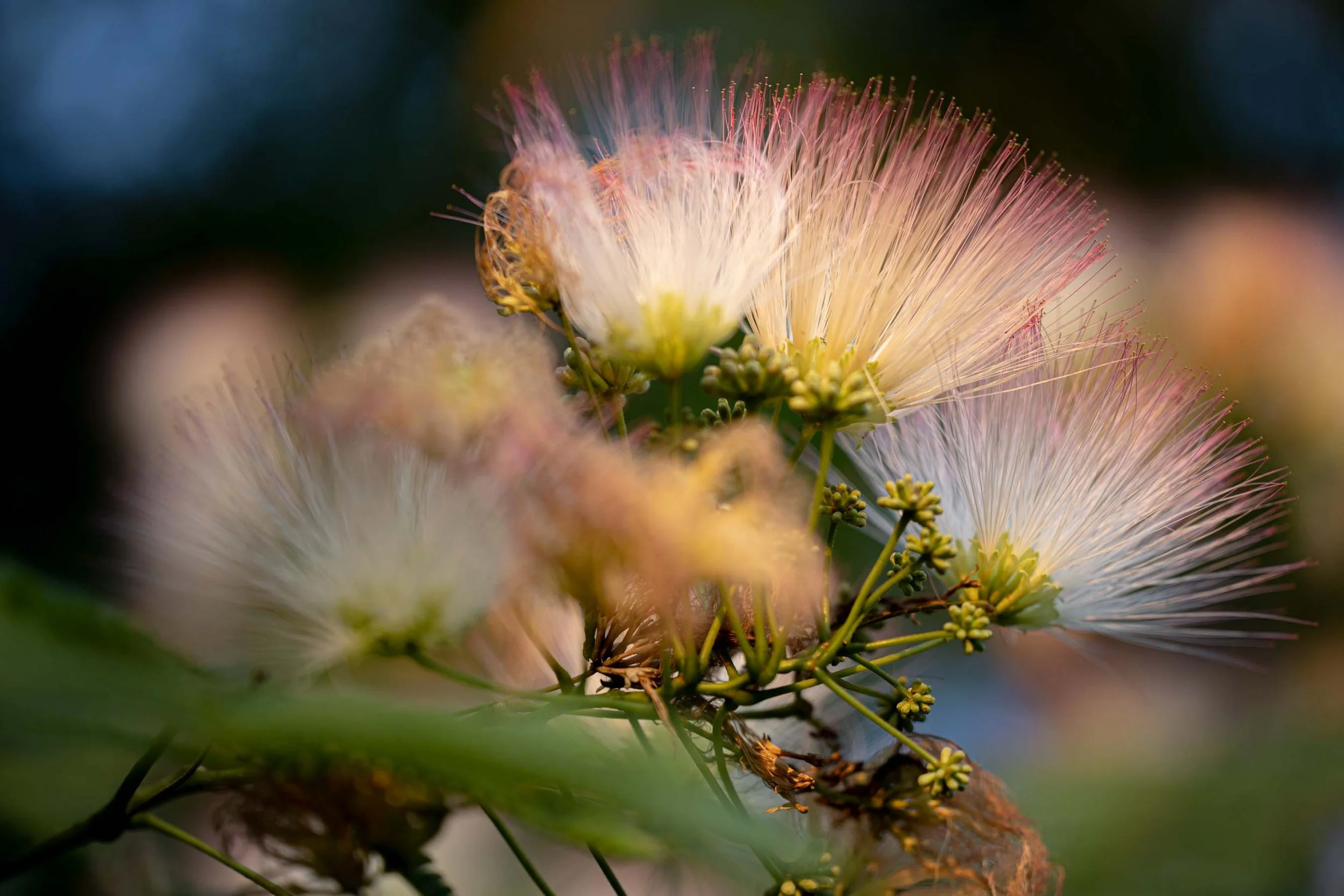
Microclimate even was too large a word for the fragrant cloud of what had just been and was still being shaken loose from the newly arrived mimosa blossoms by an early evening drizzle, small enough to travel all the way through on a bike in the space of one full breath. It’s been so rainy here, almost ten inches this week, and the mimosas have been faithfully multiplying. This evening I couldn’t help but notice that what seven days ago was a little cloud had expanded to easily outlast every breath on my thirty-minute bike ride. The little cloud was now as big as a bayou.
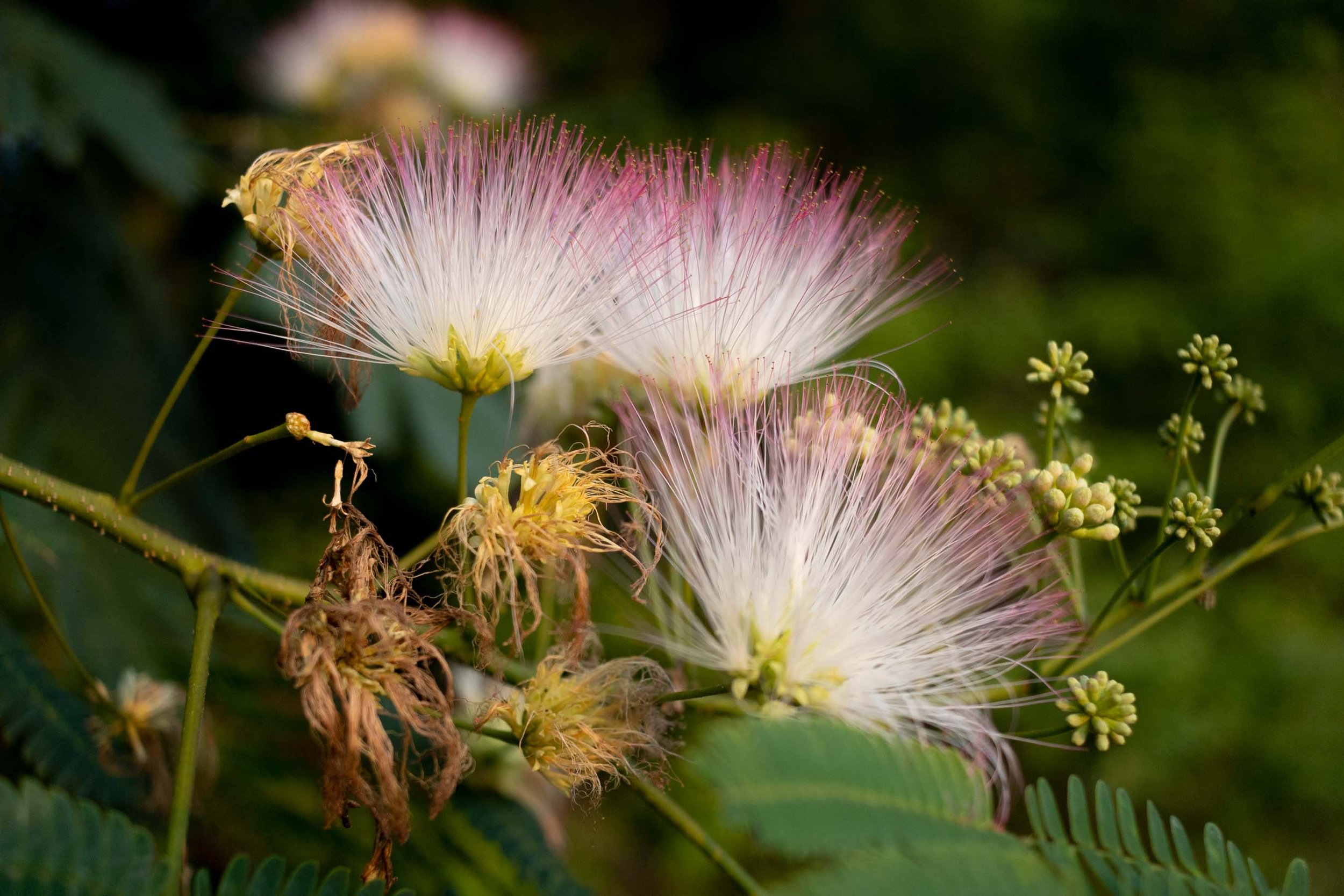
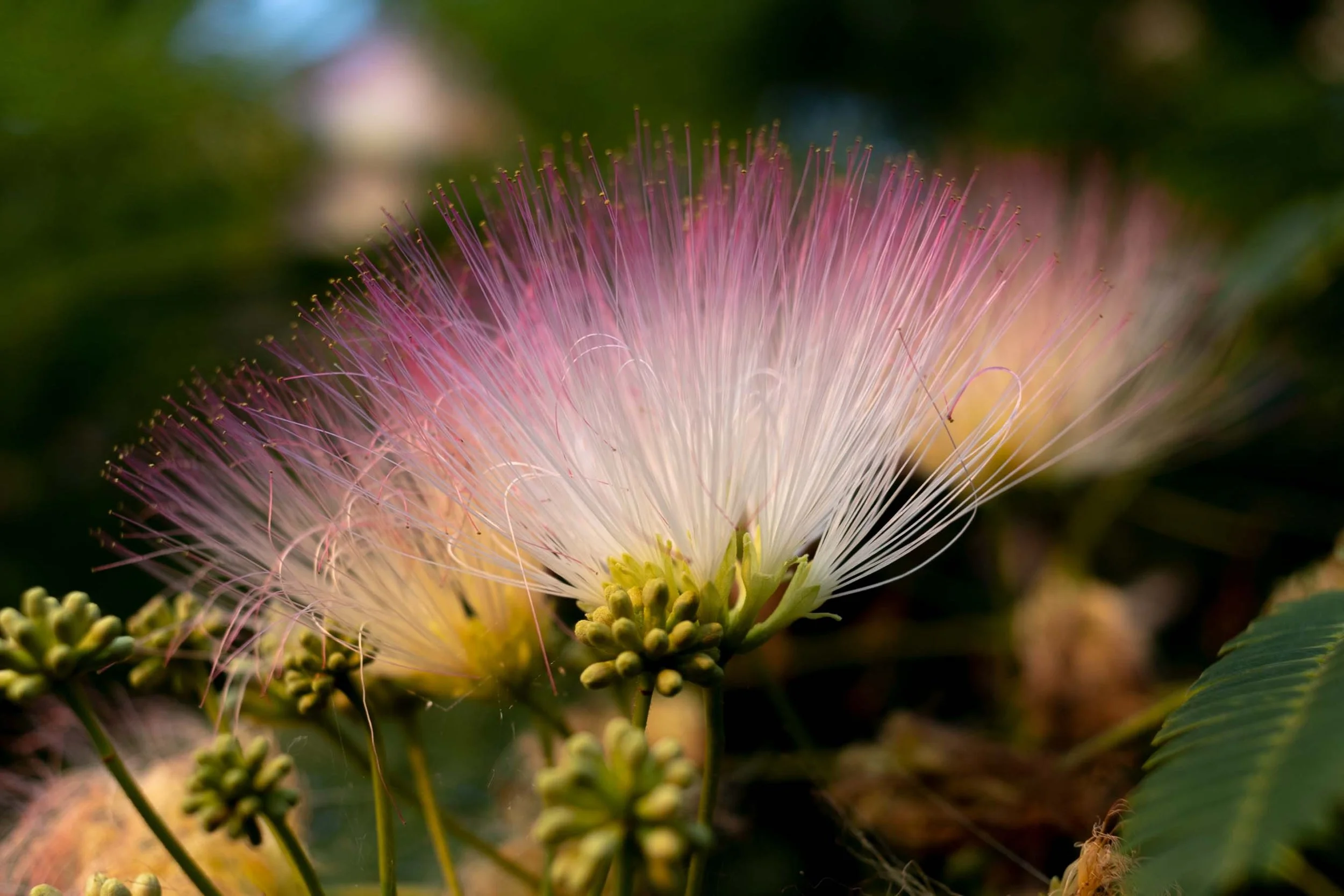
Mimosas are invasive and grow rapidly, they’re in the bean family after all, and it’s true I’ve seen them spread from year to year. At least they aren’t tallows or pears, which I always uproot with relish. I don’t think I’d ever willingly uproot a mimosa. And so what if they took over? What would be so bad about a forest of mimosas anyway? Well, there’s a rule of the forest that’s as simple as it is unbending. Not everything can survive. All the pieces have to puzzle together to fill the same space, so when something new comes along that means something old now has to go. One more mimosa means one less native red cedar or one less native sweet gum, and that’s where the loss occurs, in the loss of that nativity, and the insects and the animals that puzzle into that nativity.
The cliff swallows were circling and swooping over the bayou again this evening, cheering, cheering and singing. Did they really come out from under the bridge and start swooping and singing to greet me, or was I only imagining it? I could have sworn by the tone of their chatter that they were really happy to see me. There’s a concrete bridge over Bayou Mercier today, but I always feel the ghost of the old wooden one when I bike across it. Seems the swallows remember, too. They make mud nests under the crossbeams of the bridge, and every sunrise and every sunset, or whenever insect traffic is heavy, they circle, swooping and eating.
Traveling through the bayou landscape by bike is a good way to notice how the pieces fit together, how this bridge provides a home for generations of cliff swallows in the form of a modified cliff, how a zone at the edge of the woods between the dogwood and the asphalt creates the perfect conditions for a patch of pink primroses to flourish, and how that space provides yet another piece for insects and animals to puzzle into. Ibises highstepping through the primroses. A narrow hallway of cypresses along the edge of an unnamed coulée I always see winding into obscurity, bone dry since last October, but now, after all this rain, so beautifully wet.
I bike through a young forest on the island every day. I say young forest, but maybe it’s more accurate to call it an almost-forest, several acres of once-farmland that have been planted with long rows of equally-spaced oaks. I’ve been watching those saplings grow and grow and grow for the last twenty or so years, and they’ve finally reached the height where their leaves have interconnected to form a common canopy. This is the first year where, rather than a collection of individually planted trees, the trees have come together to create a coherent woods. When I biked through it this evening something about the birdsong densely woven into the green tissues of the oak leaves made the link between forests and birds clear to me. Forests are inseparable from birds. In other words, forests are birds. And birds, of course, are forests.
Heron fluttering up from the ragweed, and midway down the chaintre, as if to say now this is the swamp coming alive, an alligator thrashing in the coulée, camouflaged and furtive enough to show only the tip of its tail abovewater before slipping into the muddy brown dark. When you get a good rain here, the ground comes alive. Green tree frogs. Bullfrogs. Spring peepers. Southern leopard frogs. Temporary pools appear. Screaming insects take over the upper register. Cicadas. Katydids. Crickets. Crickets. Crickets. I think the twilight tonight was as loud as I’ve ever heard it, that green shrieking crust of the earth. Woodpecker circling up the trunk of a vine-strung pecan tree. Owls to my left and to my right. Mid-May, mimosa time, cool as California, when all the leaves that will arrive have finally arrived, and everything gets greener overnight.