Live Oak Fall
Before the mid–nineteenth century people tended to treat fall either agriculturally or morally. Thoreau, especially in his journals and later essays like “Autumnal Tints,” treated changing leaves as a spectacle in their own right, something to be noticed and celebrated. He recorded the exact dates leaves began to turn, the differences among maples, sumacs, and birches, the saturation and brilliance of reds and golds, the emotional lift of color just before winter’s descent. He made autumn chromatic—and we have been cutting out red and orange construction paper leaves every November since.
For Wordsworth primrose time was more than early spring; it was an emotional season, too, that luminous interval when the natural world awakens and the human spirit awakens with it. Things grow upward from the earth, and we grow upward with them. Like many poets who followed in his wake, Wordsworth loved modest flowers, especially primroses. Unlike those grand blossoms cultivated in gardens or greenhouses, primroses grow low and half-hidden along hedgerows and woodland banks. For him humility mattered. The primrose symbolized quiet endurance through winter. Innocence. Simplicity. Rebirth. The unnoticed beauty available to anyone willing to pause. Spring arrives not with spectacle, but with something small and tender.
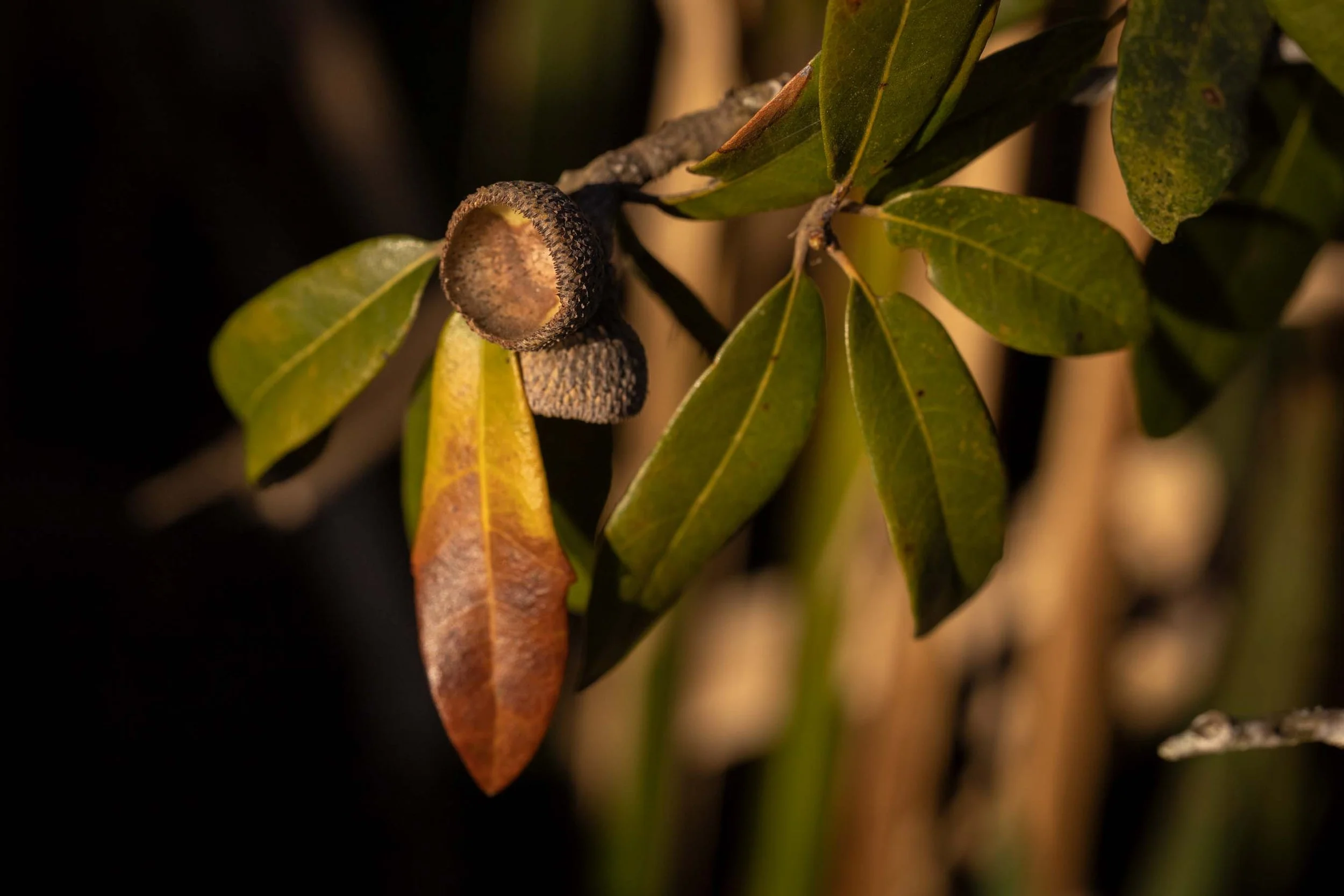
Turning to our own southern Louisiana landscape, we find ourselves now in the middle of what we might call our live oak fall. Do you know that live oaks lose their leaves every year? We call them evergreens, and it’s true, they are always green, but they lose their leaves every year just like any other oak. They just wait until spring to do it. And here we are. If you’ve been paying attention, you’ve noticed the live oak leaves blushing. Bronzes. Coppers. Dry muted reds. The older trees seem to blush first, are more eager to let go. The younger oaks hold onto their greens a little longer, but in the coming weeks they will fall, too, and their flowers will fall after their leaves do, and we’ll curse the mess that the trees leaves behind on our cars and all over our patios. Not every fall happens in autumn.
It’s a strange mingling of eternity and impermanence. The live oak, that solid and sturdy old character, outlasts us all. Generations picnic beneath the same spreading limbs. I think of my Aunt Sylvia’s live oaks, among the largest in the parish. A hundred years ago, when Catahoula Lake was a weekend resort and people drove out to dance under outdoor pavilions to Cajun music, to eat boiled crabs and to catch and fry catfish, her enormous live oak was already famously gigantic. Its canopy created a staging area where crabs would be boiled before being carried lakeside to the waiting crowds. I drove by it today, and the tree stands beautifully bare, copper leaves barely clinging to their twigs, pale green flowers sprouting in their place, brighter green leaves already pushing through, against the sighing textures of the eternally hanging moss. Aunt Siv has been gone for more than a year, and her tree, still going strong, has never taken notice.
Here spring sheds in the very season of renewal. The two movements—letting go and beginning again—arrive together, which feels much closer to the truth. Even in spring there is loss. Even in autumn there is life. Growing and fading, each choosing its moment. And when our own moment comes, we let go, and we ascend, knowing that new primroses are surely on their way, if they aren’t already sprouting up somewhere on the levee yet.